Quartz is engineered stone. Crushed natural quartz is bound with resin and pigment and pressed into a slab, which is why it arrives non-porous, consistent in color, and without the sealing schedule that comes with quarried stone.
New Generation Kitchen & Bath supplies, fabricates, and installs quartz countertops in San Antonio, and we build the semi-custom cabinets the countertop is templated to. That second half is the part almost nobody else in this city can say, and it changes the advice on this page.
The short version:
- Quartz never needs sealing, because it is not porous.
- Quartz is the better daily-use surface in most San Antonio kitchens, largely because of how the local hard water behaves on a polished surface.
- Quartz is the wrong choice against direct heat, in prolonged direct sunlight, and for anyone who wants a slab nobody else has.
- The silica safety question is an occupational one about fabrication, not about a finished countertop in your house.
- Quartz is quoted as a complete project, tailored to your layout and features. A complete cabinet and countertop renovation typically starts at $8,000.
Default does not mean automatic. This guide covers where quartz performs, where it does not, what the silica question is actually about, which quartz we supply, and what happens between choosing a color and cooking on it.
Why quartz suits San Antonio kitchens
It does not need sealing, ever. Natural stone is porous and needs a sealer refreshed periodically. Quartz is not porous, so there is no sealing schedule, no annual reminder, and no window where the surface sits unprotected.
Hard water treats it more kindly than polished natural stone. City water here is hard, typically fifteen to twenty grains per gallon according to the water system, which sits well inside the very hard bracket. Left to evaporate, that water will leave a mineral film on any surface, quartz included. The difference is what happens next. On quartz the deposit sits on top of a non-porous surface and lifts off. Most quartz manufacturers approve a fifty-fifty mix of white vinegar and water for exactly this, provided you keep the contact time short and rinse the area with clean water straight afterward, because it is dilution and rinsing that keep the acid away from the resin. On polished granite or marble the same minerals build in the surface over years, dull the polish, and eventually need professional restoration.
It is stable in a climate that swings. San Antonio kitchens run cool and dry under air conditioning for months, then take on humidity every time a door opens in August. Quartz does not absorb moisture and does not move with it.
It is consistent. Matching an island to a perimeter run, or replacing one section years later, works predictably with quartz. Natural stone does not, which is a feature when you want drama and a problem when you want a match.
It resists staining. Red wine, coffee, tomato sauce, and turmeric sit on the surface rather than soaking in.
Where quartz is the wrong choice
This is the section most countertop pages skip, and it is the reason to trust the rest of this one.
Direct heat.
A pan straight off the burner or out of the oven can ruin quartz in two separate ways. The resin binding the slab scorches and discolors, and that damage is permanent and not repairable in place. Separately, a sudden temperature change across one small area can crack the slab outright, which is thermal shock and has nothing to do with the resin. If you are the kind of cook who puts a hot cast iron pan down without thinking, either build the trivet habit or choose granite or quartzite instead.
Prolonged direct sunlight.
Quartz is an indoor material. Sustained UV exposure can fade or discolor the pigment over time, which makes it a poor choice for an outdoor kitchen run, a covered patio bar that still catches late afternoon light, or a countertop sitting under a large unshaded west-facing window. Granite and quartzite handle that exposure better.
Harsh chemicals and abrasives.
Bleach, oven cleaner, drain cleaner, and abrasive scouring pads dull the polished resin permanently, and no amount of buffing brings it back. Warm water, a soft cloth, and mild dish soap is genuinely the whole maintenance routine, with a diluted, promptly rinsed vinegar solution held in reserve for hard water spotting.
A hunt for the unrepeatable slab.
If what you want is a one-of-one piece of stone with veining nothing else in the city can match, quartz is not that. That is what quartzite and marble are for.
Is quartz safe? What the silica question is really about
The question comes up often enough that it deserves a straight answer. The concern is about silica dust, and it is an occupational one. It applies to the people cutting and shaping the slab, not to a finished countertop in your home. An installed, sealed quartz countertop is not a source of airborne silica in normal household use. On our side, every quartz slab we supply is fabricated at our own facility in an open-air work area rather than an enclosed room. On the rare occasion a cooktop cut-out or a small adjustment has to be made once we are on site, that work is done outdoors, never inside the house. It is a small detail, and it is a fair thing to ask any fabricator before you sign with them.
If you take one question from this page into your next showroom visit, make it that one. Where does the fabrication happen, and how are on-site cut-outs handled?
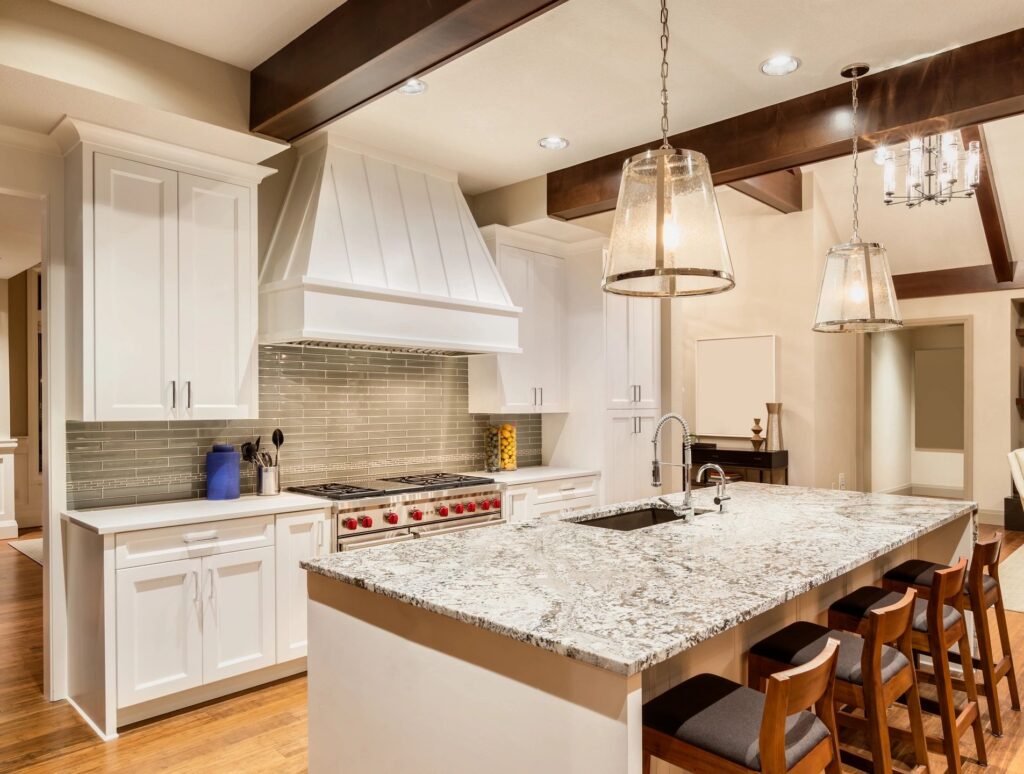
Why the cabinets underneath decide how the quartz looks
Quartz is templated to what is already installed, not to a drawing. That single fact decides how the finished run looks, and it is where most of the visible faults in a countertop actually come from.
When countertops and cabinets are bought from two different companies, the sequence gets compressed. The slab supplier is booked before the cabinet installation has fully settled, the template is taken from plans or from partially set cabinets, and the gap between the back edge of the countertop and a wall that is not straight has to be closed on install day with caulk and scribing rather than with an accurate cut. Older central San Antonio and Alamo Heights homes make this worse, because the walls in them are rarely plumb and almost never square, so a template built from a drawing is wrong before it leaves the office. Newer builds out toward Helotes, Leon Springs, and the west side of the city are usually closer to square, but usually is not a measurement, and the template still has to come off the cabinets that are actually in the room.
When both sides come from the same company, the order is fixed. Cabinets are built to the exact dimensions of the room, installed, leveled, and shimmed. Only then is the template taken, from the cabinets that are physically in the kitchen, so the back edge of the countertop follows the actual wall line rather than an idealized one.
If you are buying your countertop and your cabinets separately, ask both suppliers one question: who is taking the template, and are they taking it before or after the cabinets are installed and leveled. The answer predicts the finish.
The quartz we carry
Every quartz named below is one we supply, with samples on display in our San Antonio showroom so you can see the color and finish in person before you decide.
Whites and near-whites. Ivory Mist is the clean, quiet white that sits well against painted shaker doors. Coastal Dunes carries a warmer, sandier tone for kitchens with natural wood.
Marble-look and Calacatta veining. Calacatta Caldise and Unique Calacatta Gold are the two people come in asking for by description rather than by name, usually after seeing marble somewhere and wanting the look without the upkeep.
Grays. Midnight Mist gives the middle ground that works with almost any cabinet color, which is why it is the safest choice in a kitchen you plan to sell.
Darks and color. Lux Noir is the dramatic end of the range. Celadon brings actual color for kitchens that want it.
Color deserves more room than a paragraph, because it is the decision people change their minds about most and the one photographs are worst at. The full breakdown is in our guide to choosing a quartz color
If you are still weighing quartz against the natural stones, see how the five materials compare in our guide to countertop materials compared , and read quartzite versus quartz if those two are on your shortlist.
What quartz costs as part of a kitchen project
Quartz is not priced by the slab in any way that would be useful to you, because the slab is only part of what you are buying. The rest is layout, slab yield, edge profile, seam placement, cut-outs, tear-out of the old surface, and whether the cabinets change at the same time.
Two kitchens of identical size can quote very differently. A galley with two straight runs and an undermount sink is a straightforward fabrication. An L-shape with a peninsula, a farmhouse sink, a cooktop cut-out, and a mitered edge is a different job with the same amount of quartz in it.
We quote by project. A countertop-only project, where the cabinets stay exactly as they are, is quoted against your layout and the fabrication your run requires. Where the project covers cabinetry as well, a complete cabinet and countertop renovation, covering design, material selection, and installation, typically starts at $8,000 and rises with the choices made. Either way you receive a project proposal covering the overall project cost together with a detailed Scope of Work, so nothing is ordered before you can see what is included.
From slab to installed: what actually happens
- Design consultation. We look at the layout, how you use the kitchen, and the cabinets, then narrow the range to a few slabs worth seeing in person.
- Color and finish selection from samples in our showroom. Quartz is easier than natural stone here: because it is engineered, the sample is a reliable guide to the slab, so there is no trip to a stone yard to inspect a one-off piece. On a heavily veined marble-look quartz, ask how the pattern will fall across a long island before you sign off.
- Digital templating. Measurements come off the installed cabinets, which is why templating happens after cabinetry is in place rather than before.
- Fabrication. Your slab is cut at our facility, the edge profile is shaped, and the sink and cooktop cut-outs are made.
- Tear-out and installation. The old surface comes out, the new one goes in, and seams, sinks, and edges are finished on site.
- Walkthrough. We cover care, what to avoid, and what to expect in the first few weeks.
Where cabinets are part of the project, our semi-custom cabinets are 100 percent tailor-made to the exact dimensions of your kitchen, and production and delivery runs 7 to 10 days.
The Leon Springs kitchen in the photographs below is a straightforward example: quartz templated to new cabinetry, one seam placed where it is least visible, and an undermount sink set before the run went in.
The full week-by-week walkthrough is on our countertop installation page.
Frequently asked questions
Is quartz better than granite for a kitchen?
Neither is better in general terms, and they fail in different directions. Quartz is non-porous, never needs sealing, and resists staining, so it is the better daily-use surface for most kitchens. Granite is more heat resistant, handles direct sunlight, and gives you a slab nobody else has. Choose quartz for low maintenance and consistency. Choose granite for heat tolerance and natural character.
Does quartz stain, and does it need sealing?
Quartz does not need sealing at any point, because it is non-porous. It resists staining from wine, coffee, and tomato sauce, though it is not immune to everything. Permanent marker, some dyes, and harsh chemical cleaners can leave marks. Wipe spills within a reasonable time and clean with warm water and mild dish soap.
Can you put a hot pan on quartz?
No. Use a trivet. A pan straight off a burner or out of the oven can scorch the resin that binds the slab, and a sudden temperature change in one spot can crack the slab outright. Both kinds of damage are permanent and cannot be repaired in place. This is the single most common way quartz countertops are ruined.
How much do quartz countertops cost in San Antonio?
Quartz is quoted as part of a project rather than as a slab price, because layout, slab yield, edge profile, seams, cut-outs, and removal of the old surface drive the number as much as the material does. A complete cabinet and countertop renovation typically starts at $8,000 and rises with the choices made. You receive a project proposal with the overall project cost and a detailed Scope of Work.
Is quartz safe to have in a home?
Yes. The silica concern associated with quartz is an occupational one that applies to the people cutting and shaping slabs, not to a finished countertop in a house. An installed quartz countertop is not a source of airborne silica in normal household use. Every quartz slab we supply is fabricated at our own facility in an open-air work area, and any cut-out or adjustment needed on site is done outdoors rather than inside the house.
A recent quartz kitchen in Leon Springs
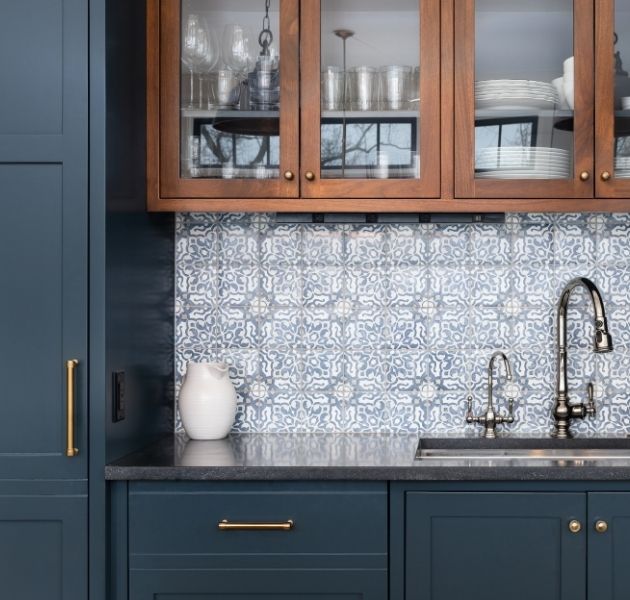
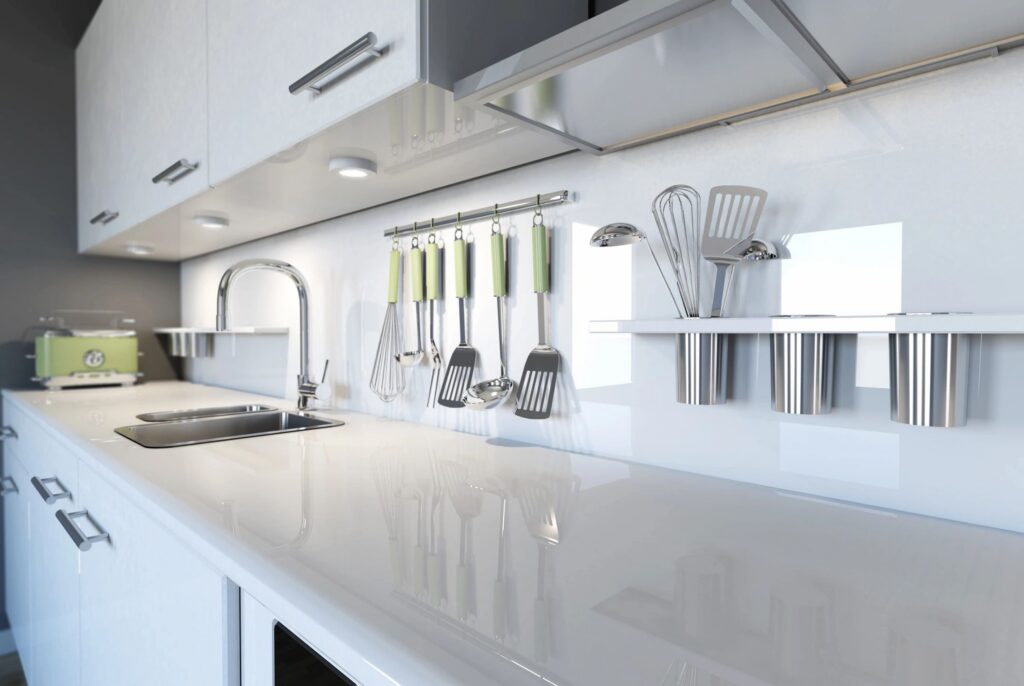
Quartz, new semi-custom cabinetry, and a single well-placed seam, in 78255.
Quartz is the surface most San Antonio kitchens should be looking at first, and it is also the one that photographs least like itself. Come and see the samples under real light, bring your cabinet finish or a photo of it, and let us look at the layout. That is how San Antonio quartz countertops get chosen well.

New Generation Kitchen & Bath
Trusted Kitchen & Bath Remodeling in San Antonio
New Generation Kitchen & Bath is a full-service remodeling company with over 10 years of experience serving the greater San Antonio area. From complete kitchen remodels and custom cabinetry to bathroom renovations, we deliver quality craftsmanship, premium materials, and dependable service designed to bring your vision to life.