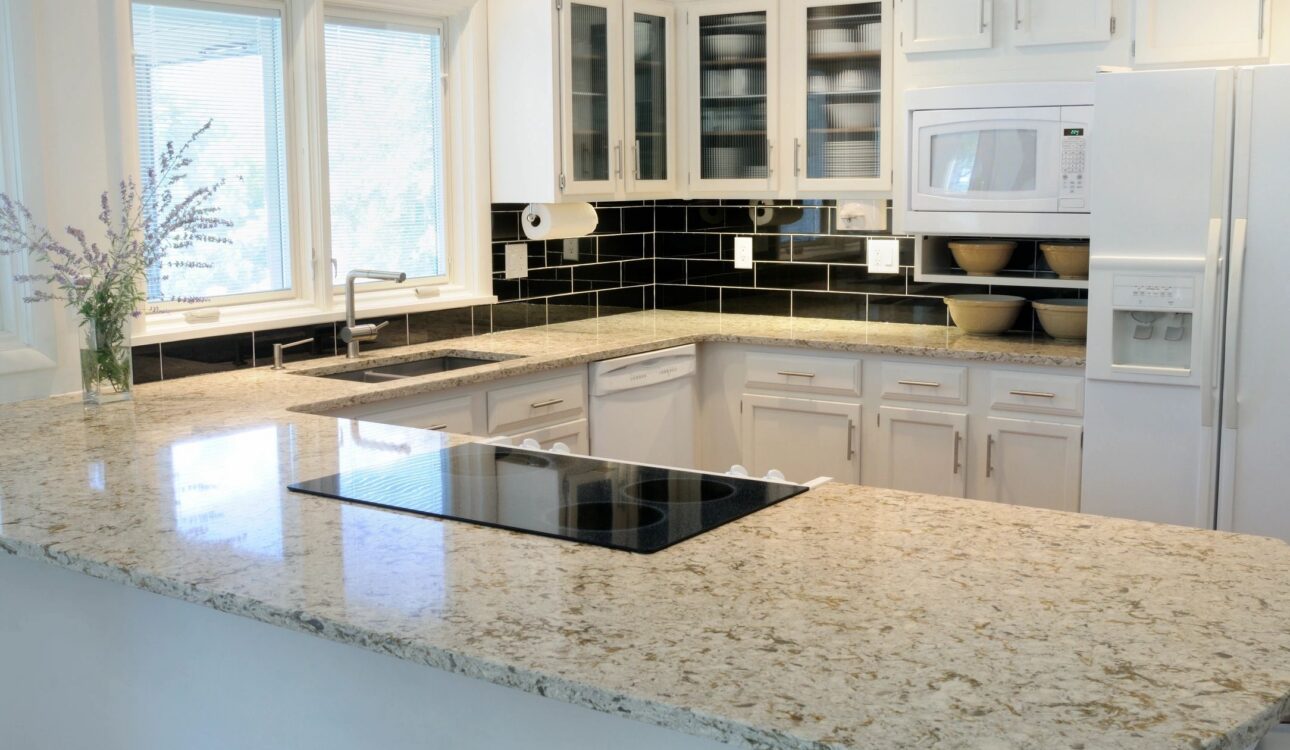
Quartz is an engineered stone made mostly of ground quartz mineral bound with resin, while quartzite is a natural stone cut from the earth. That single difference drives almost every practical distinction between them: how much upkeep each one needs, how each one holds up against San Antonio’s hard water, what each one costs, and how each one looks in a finished kitchen. At New Generation Kitchen & Bath, we fabricate and install both materials as part of our countertop fabrication and installation work for kitchens across San Antonio, including Helotes, Stone Oak, Alamo Heights, Shavano Park, and west San Antonio, and this guide walks through the real differences so you can choose with your own kitchen and habits in mind, not a showroom sample alone.
Quartz vs. quartzite, at a glance
| Quartz | Quartzite | |
|---|---|---|
| What it is | Engineered stone, ground quartz plus resin | Natural stone, quarried and cut |
| Sealing | Never needs sealing | Needs periodic sealing |
| Staining | Resists staining; avoid acidic descalers | More stain prone until sealed, and between resealings |
| Color and pattern | Consistent, engineered, wide color range | Unique, natural veining; each slab is different |
| Heat tolerance | Can scorch from direct pan heat; use a trivet | Tolerates direct heat well |
| Best fit | Busy kitchens, low-maintenance priority | A one-of-a-kind natural look, willing to reseal |
What quartz and quartzite actually are
Quartz countertops are manufactured, not mined. A quartz slab is roughly ninety percent ground quartz mineral bound together with polymer resin and pigment under heat and pressure, which is why quartz comes in a controlled, repeatable range of colors and patterns, including solid colors and patterns that do not occur in nature.
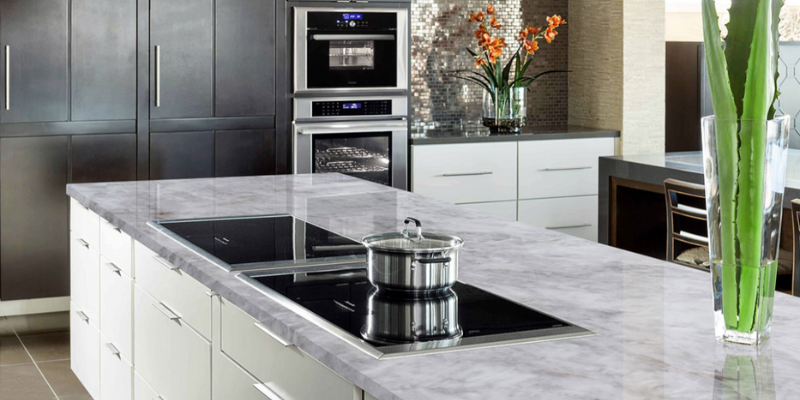
Quartzite is a natural stone, formed when sandstone is compressed and heated deep underground over a long span of time until the sand grains fuse into a dense, crystalline rock. Every quartzite slab is quarried whole, which is why no two slabs look exactly alike and why the same named quartzite can vary from one block to the next.
Granite is a third natural stone often mentioned alongside these two, and it is worth a one-line distinction here: granite is an igneous rock with visible mineral grains and typically more color variation than quartzite, while quartzite tends toward a softer, more marble-like veining. If granite is also on your list, that is a separate comparison from the one this guide focuses on.
Durability and hardness
Both materials hold up well to daily kitchen use. Quartzite is a genuinely hard natural stone, often harder than quartz on a straight mineral-hardness comparison, which gives it a slight edge in raw scratch resistance. Quartz is engineered to be dense and consistent, and its resin content makes it more resistant to chipping and cracking under an impact than a natural stone slab, which can crack along a natural weak point if struck hard enough.
Neither material is indestructible. Dropping a heavy pot squarely on a corner can damage either one, and both benefit from a cutting board rather than cutting directly on the surface, even though both resist knife scratches well in normal use.

Porosity, staining, and San Antonio's hard water
This is where the two materials diverge the most in daily life, and it is the detail most worth weighing carefully if you are choosing for a San Antonio kitchen specifically. San Antonio’s tap water is widely known to run hard, carrying a heavy mineral load, and hard water leaves the same chalky mineral spotting on any hard surface once it evaporates, around a faucet or under a glass left standing, whether that surface is quartz or quartzite.
Quartz is engineered to be essentially nonporous, so that mineral film sits on top of the surface rather than soaking in, and normal cleaning wipes it off without much effort. The one caution on quartz is the cleaning product, not the water itself: a strong acidic descaler, the kind sometimes used to cut through heavy mineral buildup, can dull or etch the resin finish over time, so mineral spots on quartz should be cleaned with a mild, non-acidic cleaner rather than a heavy-duty scale remover.
Quartzite is more porous than quartz, particularly before it is sealed and in the months between resealings, so hard water is more than a surface film there. It can work into the stone itself rather than sitting on top of it. On sealed quartzite, mineral spotting wipes off as part of normal cleaning; on quartzite that is due for resealing, hard water has more of a chance to dull the surface or leave a mark that does not wipe away as easily. Staying ahead of the sealing schedule is what keeps that from becoming a real problem.
Neither of these facts should be treated as a verdict against quartzite. Many homeowners choose it for exactly the natural veining quartz cannot fully replicate, and knowing which cleaning products to avoid on each material, and keeping quartzite’s seal current, is what keeps San Antonio’s hard water from ever becoming a real problem on either one.
Genuine quartzite is also a case where it pays to work with a fabricator who knows the material. Slab yards occasionally mislabel a soft dolomitic marble as “quartzite” because true quartzite commands a premium, and a soft, mislabeled stone will etch and scratch far more easily than the real thing, which is one more reason to see and confirm your actual slab before it is fabricated rather than choosing from a sample chip alone.
Heat resistance
This is a real, practical gap between the two, not a minor one. Quartzite is a natural stone formed by heat and pressure underground, so it tolerates direct, sustained heat well. Quartz is bound with polymer resin, and that resin can scorch and discolor permanently at roughly 300 to 400 degrees Fahrenheit, which is well within range of a pan straight off the stove. A hot-pan mark on quartz cannot be polished out the way a scorch mark can sometimes be buffed from natural stone. A trivet is not just good habit on a quartz counter, it is the one habit that protects the surface from damage a quartzite counter would simply shrug off.
Appearance and the slabs actually available
Quartz’s engineered process gives it a wide, consistent range of colors, including solid whites and grays, veined patterns designed to resemble marble, and bolder colors that no natural stone produces. Because every slab of a given quartz pattern is manufactured to match, what you see in a sample is what you get in your kitchen.
Quartzite’s appeal is the opposite: no two slabs are identical, because each one is cut from a unique block of stone. Among the quartzite we most often bring in for San Antonio kitchens are White Taj, prized for its soft, marble-like background with fine veining; Bella Gray, a cooler gray-toned option for a more contemporary kitchen; Blue Tahoe, which carries a distinctive blue-gray movement through the veining; and Macaubas Fantasy, known for bolder, more dramatic pattern movement across the slab. Because each slab is one of a kind, we recommend seeing your actual slab, not just a sample chip, before it is fabricated.
Maintenance and sealing
Quartz asks almost nothing of you day to day. Wipe up spills, clean with a mild dish soap and water, and there is no sealing schedule to track, ever.
Quartzite needs a sealant applied periodically to keep its natural porosity from becoming a problem, particularly given San Antonio’s hard water. As a general range, natural stone sealants commonly hold up anywhere from about a year to a few years before they need to be refreshed, but the right interval depends on the specific stone and how the kitchen is used, so we go over the sealing schedule for your particular slab as part of the project rather than quoting one number that may not fit every quartzite variety. Between resealings, quartzite is cleaned the same simple way as quartz: mild soap, water, and prompt cleanup of spills, especially anything acidic.
What it costs
Quartzite is a natural stone with variable slab yield, so it typically carries a higher material cost than quartz, whose manufacturing process is more predictable and produces less waste per job. Beyond that general difference, we do not price either material by the square foot or by a per-linear-foot rate. Pricing reflects the specific job, its size, scope, and complexity, and its distance from our warehouse. A complete cabinet and countertop renovation typically starts at $8,000 and rises from there depending on your choices; a countertop-only project is scoped and priced on its own during the same free consultation, so replacing your cabinets is never assumed just because you are asking about countertops. After a free consultation, you receive a full project proposal with a detailed Scope of Work, not an itemized materials list, so you can see exactly what is included before deciding.
Have questions about how either material fits your specific kitchen? Contact Us for a free consultation and quote.
Which one should you choose?
If your priority is a countertop you never have to think about, quartz is almost always the more straightforward choice, especially in a busy kitchen where nobody wants a sealing schedule on the calendar. If your priority is a one-of-a-kind natural stone with the kind of movement and depth no engineered product fully replicates, and you are comfortable keeping up with resealing, quartzite is worth the tradeoff, and San Antonio’s hard water is a manageable factor rather than a disqualifying one.
Seeing and choosing your slab
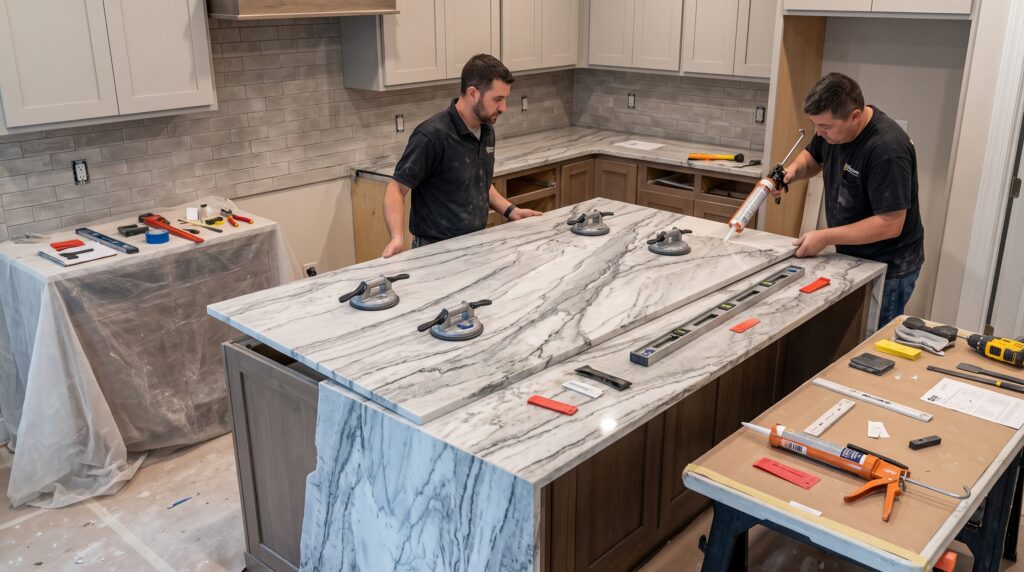
Our showroom displays samples of both materials so you can compare color, pattern, and finish in person before committing to either one. Because quartzite is a natural stone and every slab is different, choosing your exact quartzite slab is a separate step from choosing the type of stone: once you have settled on quartzite, we refer you to our stone supplier so you can see and select the actual piece that will become your countertop, since a sample chip cannot show you the specific veining and movement of the slab you will actually receive. That slab selection is handled as part of your overall project once you make your choice, so you are not left coordinating a separate purchase on your own.
Frequently asked questions
Is quartzite more expensive than quartz?
Generally, yes, quartzite tends to carry a higher material cost than quartz because it is a natural stone with variable slab yield, while quartz is manufactured with more predictable, consistent output. The exact difference for your project depends on the specific slabs chosen and the full scope of the job, which is why pricing is based on the complete project rather than a flat per-material rate.
Does quartzite need to be sealed?
Yes. Quartzite is a natural, porous stone and needs a sealant applied periodically to resist staining and moisture, including mineral deposits from hard water. Quartz never needs sealing, since it is engineered to be nonporous.
Will San Antonio's hard water damage my quartzite countertop?
Hard water will not damage a properly sealed quartzite countertop, though mineral deposits can leave a chalky spot on quartzite that is due for resealing, and it will wipe off easily once the seal is refreshed. Quartz is unaffected by hard water at any time, since it has no porous surface for mineral deposits to cling to.
Is quartzite as durable as granite?
Quartzite and granite are both hard natural stones and hold up similarly well to daily kitchen use. Quartzite tends toward softer, more marble-like veining, while granite typically shows more visible mineral grain and color variation, which is a look-and-pattern difference more than a durability one.
Can I see the actual quartzite slab before it is fabricated?
Yes. Because every quartzite slab is unique, we recommend seeing your specific slab rather than relying on a sample chip alone. Our showroom displays material samples, and once you have chosen quartzite, we refer you to our stone supplier so you can view and select the exact slab for your project.
Ready to compare quartz and quartzite for your own kitchen? Contact Us to start with a free consultation and quote.

New Generation Kitchen & Bath
Trusted Kitchen & Bath Remodeling in San Antonio
New Generation Kitchen & Bath is a full-service remodeling company with over 10 years of experience serving the greater San Antonio area. From complete kitchen remodels and custom cabinetry to bathroom renovations, we deliver quality craftsmanship, premium materials, and dependable service designed to bring your vision to life.